
Does a Website Have a Carbon Footprint?
Understand the physical infrastructure behind website use and why a carbon footprint is estimated across hosting, networks and visitor devices.
Part of our guide: Sustainable Websites: A Practical Guide for Small Businesses
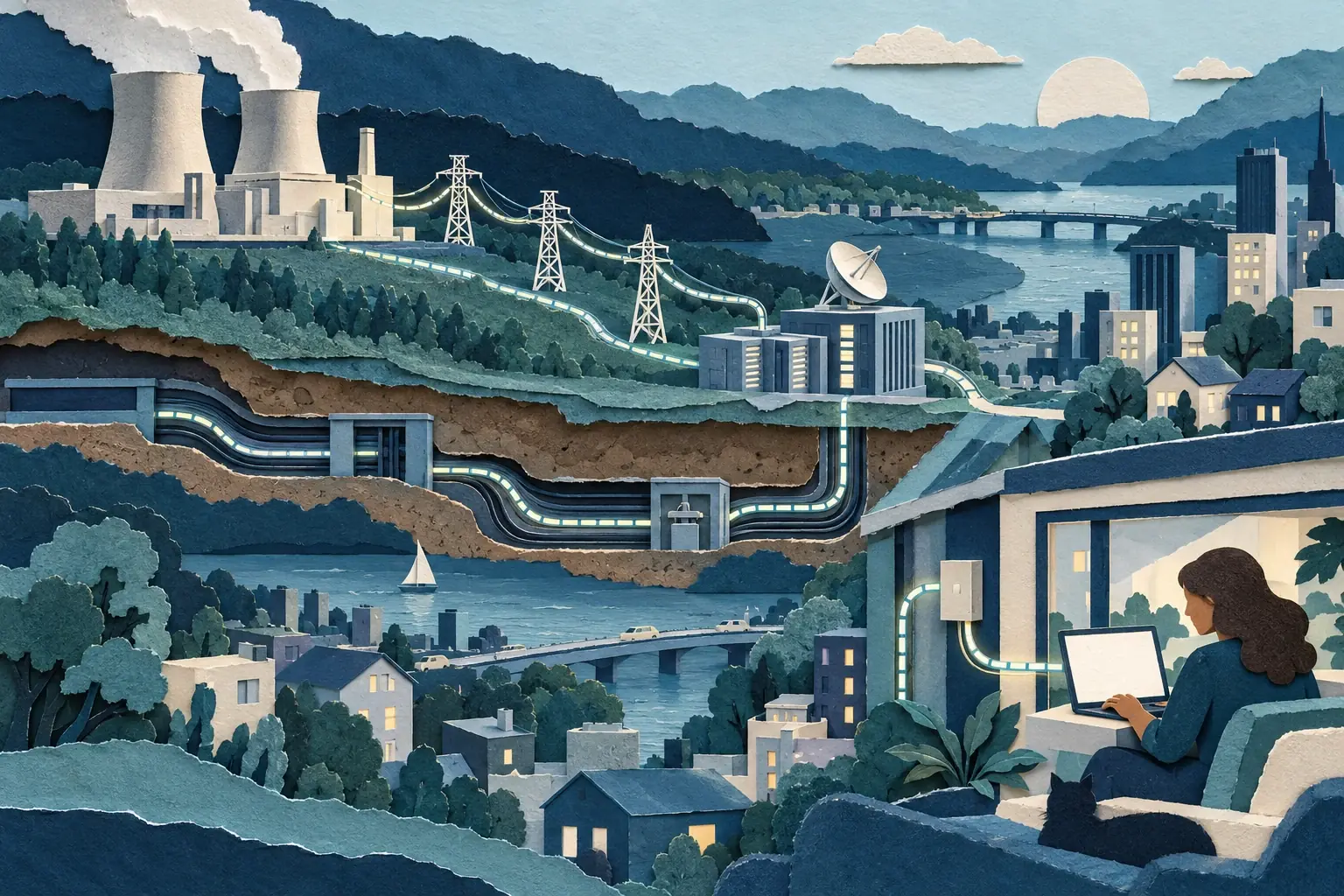
A website has environmental impacts because it relies on physical equipment, electricity and communications infrastructure. Loading a page may involve a server or cache, network equipment and the visitor’s device.
Putting information online does not make it weightless. However, attributing an exact carbon quantity to one visit requires assumptions about a shared system, so website carbon figures should normally be described as estimates.
Look beyond the hosting server
The visible website is only one layer. Content is stored, transferred, processed and displayed, often through several services.
Equipment also has manufacturing and end-of-life impacts. An operational electricity estimate is not automatically a complete lifecycle assessment.
The sustainable website guide uses this distinction to keep improvement work practical.
Thinking about your own rebuild?
Tell us about your business, your current website and what you would like to improve. We will help you work out the next step.
Understand why estimates vary
The Sustainable Web Design estimation model sets out a method with explicit system boundaries and assumptions.
Tools can differ in what they include, the data they use and how they allocate shared infrastructure. Their results should not be treated as interchangeable direct measurements.
Check the methodology before comparing scores from different services.
Separate one visit from total activity
A lighter page may reduce the resources associated with a comparable load. Total use also depends on how often pages are requested, what visitors do and whether resources are already cached.
A site with more useful visitors can have a rising total estimate even after per-page improvements. That does not by itself mean the optimisation failed.
Record both the efficiency change and the activity assumptions when evaluating progress.
Focus on things you can change
Audit oversized images, autoplay media, unused scripts and repeated downloads. Check whether visitors must open several pages because the answer is hard to find.
A clear customer journey can reduce unnecessary interaction as well as frustration. Do not remove useful detail merely to obtain a smaller transfer total.
The speed guide helps identify waste, while speed versus energy explains why the measures are related but not identical.
Examine hosting separately
A provider’s electricity sourcing can be relevant, but it does not describe every network and device involved in using the site.
The green-hosting guide offers questions about scope and evidence. Avoid assuming that a green label makes the entire website or business impact-free.
Keep reliability and data protection in the supplier assessment too.
Use carbon tools as a prioritisation aid
The guide to measuring website carbon emissions explains a repeatable comparison process. Sample representative pages and preserve the settings and date.
A calculator may be good at drawing attention to a very heavy page while remaining uncertain about the exact emissions figure. Both statements can be true.
Do not present a badge with more precision than the method can justify.
Keep the business context visible
A website can replace some journeys or paperwork while also creating new digital activity. Those wider effects need their own evidence; they cannot be inferred from page size alone.
For a small business, a sensible first project is to reduce obvious waste and document the result. Broader environmental claims may need specialist assessment.
Review the site periodically as new tools and media are added. If you want help identifying practical website improvements without overstating their impact, contact AfterWorks.