Real Business Photos vs Stock Images: Which Builds More Trust?
Choose real business photography for evidence and stock imagery for appropriate illustration, with permissions, honest labels and fast delivery.
Part of our guide: How to Make Customers Trust Your Business Website
Real photographs are usually the strongest choice when an image is meant to prove who you are or what you have done. Stock imagery can still be useful for atmosphere or explaining a general subject, provided it is not presented as your team, premises or completed work.
The distinction is purpose. A website does not need every image to be documentary, but customers should be able to tell what counts as evidence.
Use real images for specific claims
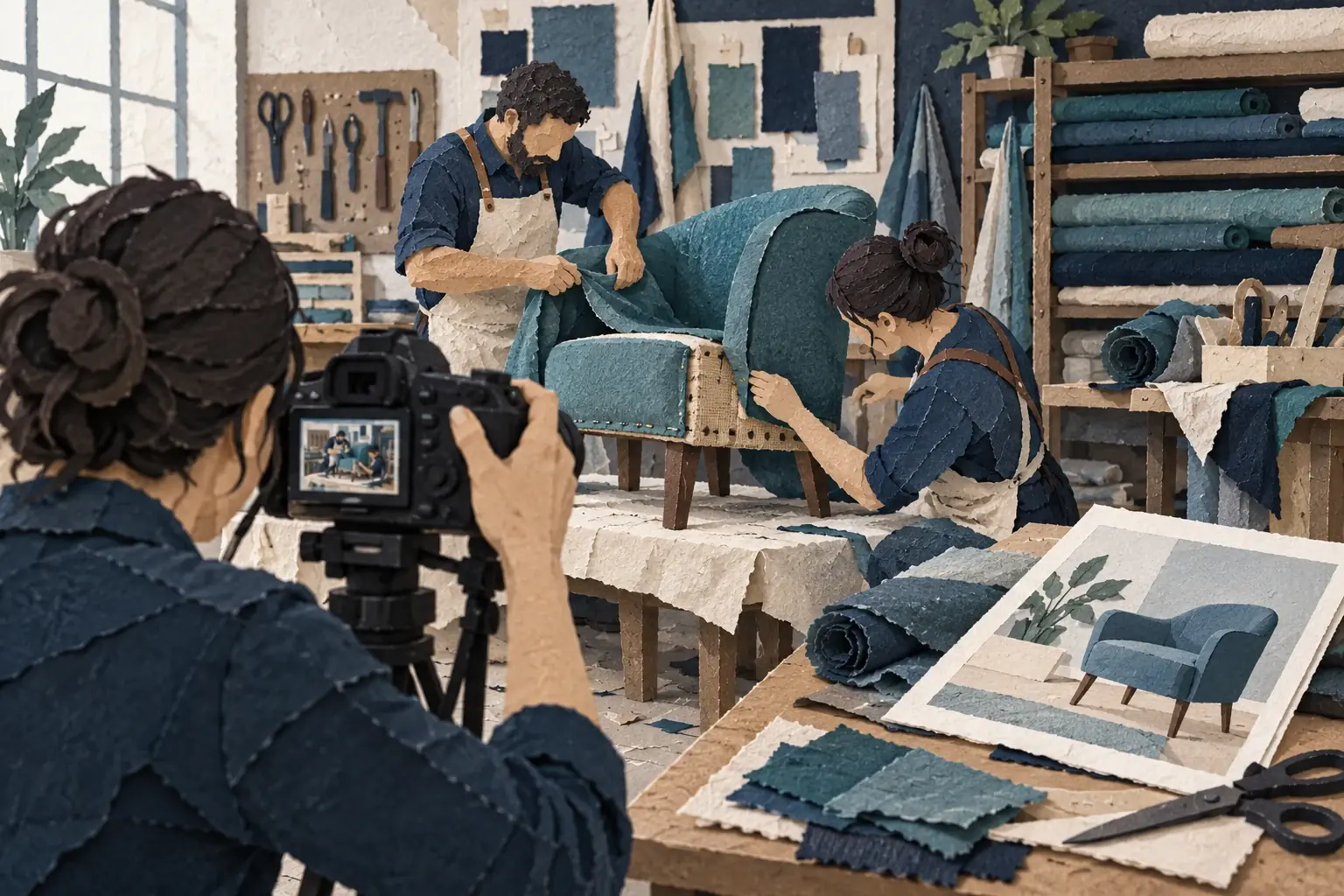
If you say your team carries out a specialist installation, show an authorised photograph of that work when possible. A generic construction image cannot demonstrate your own experience.
Useful photographs include the finished result, relevant details, the people involved and the working environment. A clear set of three images may explain more than one dramatic wide shot.
This supports website trust by connecting the written claim to something visitors can inspect.
Thinking about your own rebuild?
Tell us about your business, your current website and what you would like to improve. We will help you work out the next step.
Do not confuse authenticity with poor presentation
A real photograph still needs suitable lighting, focus and framing. Remove distracting clutter where doing so does not misrepresent the work.
Plan the purpose before taking the picture. Leave room for responsive cropping and capture both a wider view and useful detail. Check whether important information disappears when the image is shown in a narrow card.
The guide to making a website look professional covers consistency without requiring every business to commission a large shoot.
Give staff and customers a choice
Agree how photographs will be used and obtain the permissions or other lawful arrangements appropriate to the situation. Take particular care with children, sensitive services and private customer locations.
A customer agreeing to the work does not automatically mean they agreed to become website marketing material. Keep a record of the agreed use and a process for handling concerns.
Avoid showing house numbers, access codes, paperwork or personal details accidentally captured in the background.
Use stock images honestly
Stock photography may work for an article about a general business issue or an abstract service concept. Check the licence, attribution requirements and any restrictions on commercial use.
Do not place a stock portrait beside “Meet our team” or describe a generic room as a completed customer project. A small disclaimer hidden elsewhere may not correct the impression.
The same principle applies to AI-generated imagery. An editorial illustration can explain an idea, but it should not masquerade as documentary evidence.
Build a small reusable image library
Organise approved images by service, project, people and usage permission. Keep original files and sensible filenames, plus dates when they affect the meaning.
An About page needs different images from a local project case study. Capture the material for both while the work is accessible.
Record when a photograph should be reviewed. A former employee’s portrait or an old vehicle livery may no longer describe the current business.
Optimise delivery without losing meaning
Resize images for their displayed role and use an appropriate modern format. Supply useful alternative text for meaningful content and avoid packing essential words into the picture.
Do not upload a full camera file for a small thumbnail. Equally, do not compress project detail until it becomes impossible to judge the work.
Test the page on a phone. First impressions depend on the relationship between the image, wording and loading behaviour.
Start with the evidence you can obtain
List the five questions customers ask before booking. Identify which could be answered by an honest photograph, then plan a modest capture session around those questions.
This is more useful than filling every gap with unrelated imagery. If your current website hides the quality of your real work, contact AfterWorks to discuss a clearer presentation.